

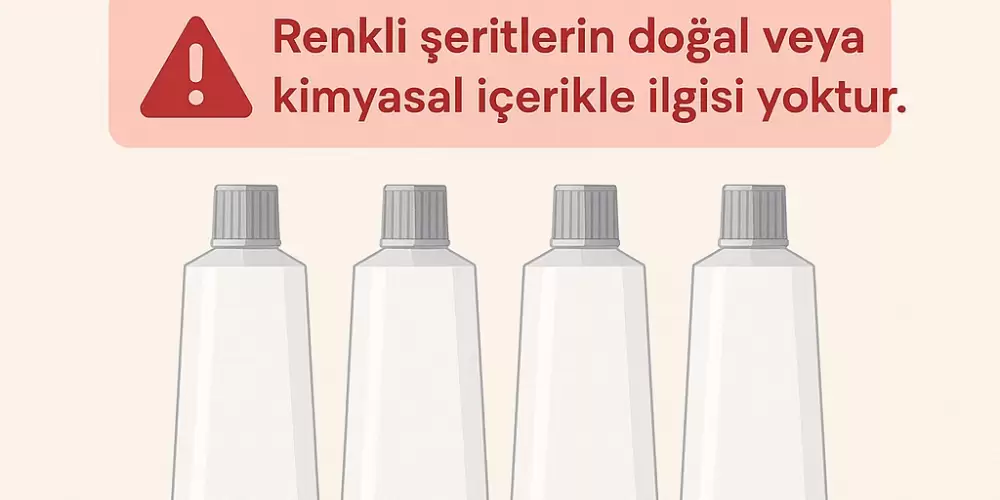
According to a widely shared claim on social media platforms in recent years, the colored stripes (black, green, red, blue) on the bottom of toothpaste tubes provide information about the composition of the toothpaste. It is claimed that these colors mean;
Black: Entirely chemical
Red: A mix of chemical and natural
Blue: A mix of medical and natural
Green: Completely natural
However, this information is false and does not reflect the truth.
The colorful blocks found on the bottom of toothpaste tubes are called "eye marks" or "color marks". These marks are technical codes read by machines to correctly cut and fold the packaging. In other words, the optical sensors on the packaging production line use these colored marks as a reference for cutting.
These colors have nothing to do with the composition of the toothpaste.
The choice of color depends on the contrast with the packaging design.
It varies according to the color spectrum detectable by the machine.
Printing ease and cost are also determinative.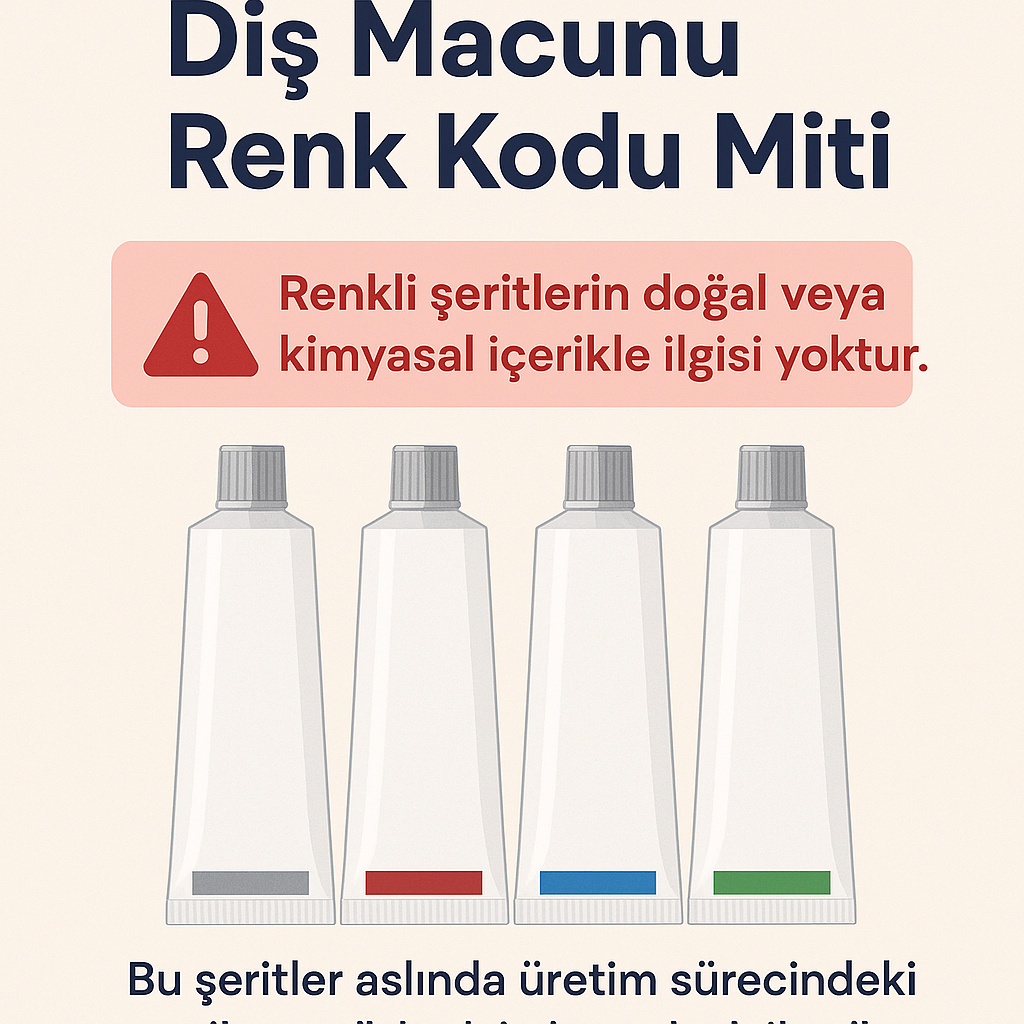
Different color stripes may appear in different batches of the same brand.
This is proof that the colors have no relation to the content.
| False Claim | Reality |
|---|---|
| Black stripe = Chemical | Machine cutting point indicator |
| Green stripe = Natural | Packaging cutting code |
| Color is for the consumer | No, it's for the machine |
The only way to understand the content of a toothpaste is to read the "Ingredients" section on the tube.
Example content:
Sodium Fluoride: Prevents cavities
Hydrated Silica: Cleansing agent
Sorbitol: Provides flavor
Menthol: Provides freshness
You can also use the following websites for content analysis:
The colored boxes at the bottom of toothpaste tubes do not provide information about the content. These are simply technical eye marks used to cut the packaging correctly. If you want information about the content, you need to look at the ingredients list on the packaging.